June 30, 2011

STRANGEST AMAZING CARS CONCEPT

P-Eco
Although it looks a bit too sci-fi for the desert, The P-Eco vehicle definitely looks at home since the lack of a roof may prove annoying in other climates. Designed by Jung-Hoon Kim, the P-Eco vehicle is an electric car is actually made to make life easier in the city. Equipped with our piezoelectric devices on the front and rear of the driver's seat, according to Naresh Chauhan, it begins charging as soon as the ignition is turned on.


eRinGo Concept Car
The eRinGo electric concept car is a ring-shaped vehicle that has a large wheel running around its center, while two medium sized wheels are present on each side. When the car is in motion, these wheels help it across turns, and when the car is still these wheels extend to provide balance and support. A rotor/ gyro system in the car helps it maintain balance on the single wheel. The two seater concept has steering wheels for both passengers, allowing either to take control.

Peugeot Egochine Concept Car
You thought the three-bar razor blade grille Ford's using lately was Gillette-inspired, check out Egochine, a single-person, tripod finalist in the Peugeot design contest. Creator Paolo De Giusti says it's "a vehicle built to carry a person very self-centered." The car's conceived with a hydrogen fuel cell in the fuselage mounted ahead of the rear-seated driver and powering a pair of electric motors turning to the front. It takes inspiration from the fabulously-bodied Isotta-Faschini's and other coach-built classics. It also seems to take inspiration from the Gillette Fusion Power razor.

Peugeot Moovie Concept Car
The Portuguese designer André Costa took another novel approach to ease city parking and manoeuvring. His design Moovie, made for the 2005 Concours de Design Peugeot, features two huge hub-less side-wheels which are used for both driving and steering. Each wheel is independently driven by an electric motor, allowing the Moovie to rotate on its own axis and squeeze into the tightest parking spots. To increase stability, the two side-wheels are tilted inwards under a ten degree angle.

A360 Concept Car
The A360 Concept from designer Huynh Ngoc Lan looks like a crossbreed between a UFO and some stealth fighter jet. Not that the concept is bad, it is just sort of weird. The triangular body has a panoramic glass roof, then there is the camera system on the exteriors that works to provide the driver with additional feedback. The car moves on three spheres, not wheels, which actually makes some sense considering that it is capable of moving in any direction on the ground.

Since the wheels are spherical, they need not move as the car makes a radical change in angle. To settle well with the new direction, the cabin is capable of a full rotation. To accommodate these functions, the steering wheel has undergone a bit of a change. A control ball takes the role of a steering wheel, with integrated functions for right, left and rotation.


Britisher Dunderdale describes ‘Kassou', which is Japanese for ‘Glide', as “a very compact 3-wheel vehicle, with rear splitting doors and a sitting configuration that mimics a Jet–ski or motorbike arrangement in having a central ‘bench' for two people and moped like controls at the front.”
The large glazing of the cockpit is attached to an adjustable rubber neck which can be expanded and contracted to improve aerodynamics or inside headroom, and a ‘side-car' can be attached via a lower section of the vehicle which also provides an extendable structure for storage of bags and even bikes. Dunderdale's design scored the highest for ‘unique and appealing design' within the professional designer category.


BMW Lovos
Designer Anne Forschner noticed the mundanity of our mass-produced world, and created the Lovos concept to encourage viewers to “escape from the embrace of pleasant conformism.” The concept stands unique to draw attention towards its form, and is covered in particles and structures that when closed give an appearance of fish scales, and of a totally weird car when open. The concept has 260 identical interchangeable parts in its structure, most of these elements form the car's fish scales. When open, these scales function as air brakes, and keep their direction towards the sun to harvest solar energy. Apart from the scales on the body, 12 scales cover each wheel of the car. As the wheels are set into motion, these scales retract to create a semblance of turbines.


Aurora Safety Car
The Aurora Safety car was a creation of American catholic priest Alfredo Juliano. Designed with safety for passengers and pedestrians as the only concern, the Aurora's appearance was an afterthought. And the car has been hailed by many as the ugliest vehicle of all time. Safety features of this hideous creation include; saftey belts - rare in 1957, foam filled bumpers mounted on gas shocks, roll over bars built into the perspex dome roof, and a telescopic steering column. The Aurora's rounded windscreen was intended to eliminate the need for windscreen wipers.

Mazda Nagare Concept Car
The Nagare (pronounced “na-ga-re”) is a concept car that was introduced by Mazda at the 2006 Los Angeles Auto Show. The Nagare is considered to be an exercise in natural and organic car design to explore the future of Mazda automobiles. Its name “Nagare” translates into English as “flow” and the designers specifically studied motion and the effect it has on natural surroundings when creating this vehicle. It was designed by Laurens van den Acker, Mazda's global design director, and his advanced design studio team in Irvine, California. The Mazda Nagare is a celebration of proportions and surface language according to its designers. Its bodylines flow like liquid across its smooth seamless design and there are no distinguishing marks that detract from the overall theme of the car. It has a large windshield that rakes at a very steep angle molding itself into the glass roof of the car. Its large and aggressive wheels are wrapped into the wheel wells, incorporating them as a part of the body.

Honda Fuya-Jo Concept Car
History has produced some wonderful concept cars that became significant production models. It has also produced many that were somewhat less than well received. Japan in particular, has an automotive culture which takes significant chances with its concept vehicles, and is often prepared to go well beyond the traditional to explore new niche markets. One such long shot was the Fuya Jo from Honda – the vehicle whose name means "Sleepless City", was designed specifically to transport “party animals who demand the full excitement of night life.” Shown at the 1999 Tokyo Show and seen at major auto shows as recently as 2002, Honda clearly had the ecstacy generation in mind with this vehicle designed to allow the occupants to stand and dance their way from venue to venue. The interior has a distinct dance club theme, with a dashboard designed to resemble a DJ's mixing desk (circa 1998) and the steering wheel shaped accordingly as a turntable. Not surprisingly, the sound system incorporated into the Fuya Jo was powerful and the car was designed to test the youth market's ideas on what they wanted from the automotive industry.

Toyota EX-III Concept Car
Shown at the 1969 Tokyo Motor Show, the EX-III was a big brother of a former concept model. The larger body was even more aerodynamic, being built very low with a pointed front (no bumper), a long bonnet, sharply sloped sides and a tapered rear. Large exhaust outlets hinted at a gas turbine engine but no details were given.

Magnet Car
The Magnet Car was designed by Mat˙ö Proch•czka as a solution to the challenge of finding more fuel efficient methods of transport. This car uses magnets the same polarity as the road, which effectively ‘lifts' the car off the road, making it lighter by 50%. Of course, this is a true ‘concept car', as magnetized roads are a purely hypothetical idea, and yet to be realized

1965 Dodge Concept Car
This unbelievable weird 1965 Dodge Deora concept was put for auction in 2009. Built for the Detroit Autorama back in the '60s, by some hot-roddy types called Mike and Larry Alexander, the Deora later became one of the original Hot Wheels toy cars. The more astute among you may have noticed the lack of doors. But instead of slithering in through the side windows, the front of the cab opens like a venus flytra

GREAT AMAZING CARS
featured by:

PROSPER CO., LTD
QUALITY , SPECTAULAR SERVICE GUARANTEED

Ms. Mika Ayuki
Sales Department Representative
+81 50 5539 9816 || mika@prosperjp.com

for more amazing cars 
click on the link below
www.prosperjp.com   


Japan's Counterpart of Mercedez-Benz -- Lexus

Lexus is the luxury vehicle division of Japanese automaker Toyota Motor Corporation. First introduced in 1989 in the United States, Lexus is now sold globally and has become Japan's largest-selling make of premium cars. Lexus vehicles are officially marketed in over 70 countries and territories worldwide.[1] The Lexus marque has ranked among the ten largest Japanese global brands in market value,[2] and the brand is a major participant in the premium automotive sector. The division's world headquarters are located in Toyota, Aichi, Japan, with major operational centers in Brussels, Belgium, and Torrance, California, United States.
Lexus originated from a clandestine flagship sedan project that began in 1983. This effort developed into the original Lexus LS, which was the first vehicle to wear the Lexus marque upon its launch in 1989. In following years, Lexus added sedan, coupé, convertible, and SUV models. In 2005, a hybrid version of the RX crossover debuted, and additional hybrid models were subsequently introduced to the Lexus lineup. In 2007, Lexus launched its F marque performance division with the debut of the IS F sport sedan, followed by the LFA supercar in 2009.

From the start of production, Lexus vehicles have been consistently produced in Japan, with manufacturing centered in the Chūbu and Kyūshū regions, and in particular at Toyota's Tahara, Aichi, Chūbu and Miyata, Fukuoka, Kyūshū plants. Assembly of the first Lexus built outside the country, the Ontario, Canada-produced RX 330, began in 2003. Following a corporate reorganization from 2001 to 2005, Lexus also operates its own design, engineering, and manufacturing centers, solely responsible for the division's vehicles.
Since the 2000s, Lexus has increased sales outside its largest market in the United States through an ongoing global expansion. The division inaugurated dealerships in Japan's domestic market in 2005, becoming the first Japanese premium car marque to launch in its country of origin.[3] Further debuts in Southeast Asia, Latin America, and other export regions have since followed. The division's lineup has also been expanded to reflect regional specifications in model and powertrain configurations.

I have a good list of quality used cars. Message me.
Ryu
 ryu@mercy.co.jp
  +815055328180
   www.prosperjp.com


The Mercedes Counterpart From Japan

Lexus is the luxury vehicle division of Japanese automaker Toyota Motor Corporation. First introduced in 1989 in the United States, Lexus is now sold globally and has become Japan's largest-selling make of premium cars. Lexus vehicles are officially marketed in over 70 countries and territories worldwide.[1] The Lexus marque has ranked among the ten largest Japanese global brands in market value,[2] and the brand is a major participant in the premium automotive sector. The division's world headquarters are located in Toyota, Aichi, Japan, with major operational centers in Brussels, Belgium, and Torrance, California, United States.
Lexus originated from a clandestine flagship sedan project that began in 1983. This effort developed into the original Lexus LS, which was the first vehicle to wear the Lexus marque upon its launch in 1989. In following years, Lexus added sedan, coupé, convertible, and SUV models. In 2005, a hybrid version of the RX crossover debuted, and additional hybrid models were subsequently introduced to the Lexus lineup. In 2007, Lexus launched its F marque performance division with the debut of the IS F sport sedan, followed by the LFA supercar in 2009.

From the start of production, Lexus vehicles have been consistently produced in Japan, with manufacturing centered in the Chūbu and Kyūshū regions, and in particular at Toyota's Tahara, Aichi, Chūbu and Miyata, Fukuoka, Kyūshū plants. Assembly of the first Lexus built outside the country, the Ontario, Canada-produced RX 330, began in 2003. Following a corporate reorganization from 2001 to 2005, Lexus also operates its own design, engineering, and manufacturing centers, solely responsible for the division's vehicles.
Since the 2000s, Lexus has increased sales outside its largest market in the United States through an ongoing global expansion. The division inaugurated dealerships in Japan's domestic market in 2005, becoming the first Japanese premium car marque to launch in its country of origin.[3] Further debuts in Southeast Asia, Latin America, and other export regions have since followed. The division's lineup has also been expanded to reflect regional specifications in model and powertrain configurations.

I have a good list of quality used cars. Message me.
Ryu
 ryu@mercy.co.jp
  +815055328180
   www.prosperjp.com

THE TOKYO TOWER


Tokyo Tower (東京タワー Tōkyō tawā?) is a communications and observation tower located in Shiba Park, Minato, Tokyo, Japan. At 332.5 metres (1,091 ft), it is the second tallest artificial structure in Japan. The structure is an Eiffel Tower-inspired lattice tower that is painted white and international orange to comply with air safety regulations.
Built in 1958, the tower's main sources of revenue are tourism and antenna leasing. Over 150 million people have visited the tower since its opening. FootTown, a 4-story building located directly under the tower, houses museums, restaurants and shops. Departing from here, guests can visit two observation decks. The 2-story Main Observatory is located at 150 meters (490 ft), while the smaller Special Observatory reaches a height of 250 meters (820 ft).
The tower acts as a support structure for an antenna. Originally intended for television broadcasting, radio antennas were installed in 1961 and the tower is now used to broadcast signals for Japanese media outlets such as NHK, TBS and Fuji TV. Japan's planned switch from analog to digital for all television broadcasting by July 2011 is problematic, however. Tokyo Tower's current height is not high enough to adequately support complete terrestrial digital broadcasting to the area. A taller digital broadcasting tower, known as Tokyo Sky Tree, is currently planned to open in 2012.

June 29, 2011

The best place to get NAKED


Soaking in onsen (natural, mineral-rich hot springs) is a  best place to get naked and centuries-old health-giving tradition in which most Japanese immerse themselves. Onsen etiquette prescribes that the soaker washes thoroughly before entering the male or female bathing area. When walking around, cover your private parts with tiny towels and, once in, don’t make waves. Some facts worth checking: some onsen waters are also intended for drinking, check before you gulp. And some don’t allow bathers with tattoos.

Just like here in Prosper Co.Ltd. the BEST PLACE TO BUY USED CAR. and of course don't forget your lovable ;


Ms. Ai Tamaki
Sales Representative
Prosper Co. Ltd Japan
Office Tel #: +81-50-5539-9816  

Jujutsu


Jujutsu (柔術:じゅうじゅつ jūjutsu?), literally translates to "art of pliance". More accurately, however, it means the art of using indirect force, such as joint locks or throwing techniques, to defeat an opponent, as opposed to direct force such as a punch or a kick. This is not to imply that jujutsu does not teach or employ strikes, but rather that the art's aim is the ability to use an attacker's force against him or her, and counter-attack where they are weakest or least defended.
Methods of combat included striking (kicking, punching), throwing (body throws, joint-lock throws, unbalance throws), restraining (pinning, strangulating, grappling, wrestling) and weaponry. Defensive tactics included blocking, evading, off balancing, blending and escaping. Minor weapons such as the tantō (dagger), ryufundo kusari (weighted chain), jutte (helmet smasher), and kakushi buki (secret or disguised weapons) were almost always included in koryū jujutsu.
Most of these were battlefield-based systems to be practiced as companion arts to the more common and vital weapon systems. At the time, these fighting arts went by many different names, including kogusoku, yawara, kumiuchi, and hakuda. In reality, these grappling systems were not really unarmed systems of combat, but are more accurately described as means whereby an unarmed or lightly armed warrior could defeat a heavily armed and armored enemy on the battlefield. Ideally, the samurai would be armed and would not need to rely on such techniques.[citation needed]
In later times, other koryū developed into systems more familiar to the practitioners of the jujutsu commonly seen today. These systems are generally designed to deal with opponents neither wearing armor nor in a battlefield environment. For this reason, they include extensive use of atemi waza (vital-striking technique). These tactics would be of little use against an armored opponent on a battlefield. They would, however, be quite valuable to anyone confronting an enemy or opponent during peacetime dressed in normal street attire. Occasionally, inconspicuous weapons such as knives or tessen (iron fans) were included in the curriculum.[citation needed]
Today, jujutsu is practiced in many forms, both ancient and modern. Various methods of jujutsu have been incorporated or synthesized into judo and aikido, as well as being exported throughout the world and transformed into sport wrestling systems, adopted in whole or part by schools of karate or other unrelated martial arts, still practiced as they were centuries ago, or all of the above.

How about buying cars on our site


MITSUBISHI DELICA SPACEGEAR///1999MODEL


FOB Price : $4,589

FOR MORE PICTURES
AND DETAILS FOR THIS CAR
PLEASE
CLICK THE LINK
BELLOW


          http://www.prosperjp.com/stock/MITSUBISHI/DELICA%20SPACEGEAR/024874/


AND CONTACT

TOSHI

+81-50-5539-9816/ +81-50-5809-5051


OR VISIT


LAND OF THE RISING SUN RECIPE


Japanese Sushi Rolls


Ingredients :


  • 40g deseeded cucumber – chopped very finely
  • sushi nori – 4 sheets
  • 120g smoked salmon
  • 300g sushi rice
  • 2 tablespoons caster sugar
  • 3 tablespoons rice wine vinegar
  • spring onions, very finely chopped
  • 2 teaspoons Wasabi paste
  • pickled ginger to garnish
  • Soy sauce to serve

Instructions :


  1. Cook the sushi rice in boiling water – refer to pack for cooking times. While the rice is cooking, put the sugar and rice wine vinegar in a pan and heat until the sugar dissolves. Once the rice is cooked, drizzle the sugar/vinegar mixture over it and add the spring onions and chopped cucumber. Cover with a cloth and leave to cool.
  2. Divide the rice into four portions. Slice the salmon into 1cm wide strips. Place a sheet of nori (shiny side down) on a bamboo mat. You can use a sheet of baking parchment but bamboo will be easier if you have it. Spread one of the four rice portions over the nori. Press it down evenly, leaving a 1cm gap around each side.
  3. Now place one quarter of the salmon along the center of the layer of rice. Spread 1/2 teaspoon of wasabi paste on the salmon. Using the bamboo mat, roll up the nori tightly. You should roll it as tightly as you can to ensure the sticky rice holds everything together. Repeat the above steps to create 3 more rolls.
  4. Use a wet knife to cut each roll into eight equal sized slices, standing them upright on a serving plate. Rinse the knife between each cut. Garnish with pieces of pickled ginger and a small dish of soy sauce.

HERE IN PROSPER COMPANY LTD., 
we will give you the best that we have just like this car 
and for more
 CARS and RECIPES
contact 
KEI OOMORI 
kei@mercy.co.jp / +81-50-5532-8180


Japanese Bath


Before you take a hot bath, please check the following;

1. Please take off your underwear before you go into the bathing area.
2. Please wash yourself thoroughly before getting into the bathtub.
(Please sit down while taking a shower, and do not waste water.)
3. Please keep your towel out of the bathtub.
4. Please do not run in the bathing area, and do not swim in the bathtub.
5. Please refrain from washing your clothes or underwear.
6. Please wipe yourself off before going into the dressing area.
ATTENTION;
Please do not take a hot bath just before or after the meal, and also when you get drunk.


BY:

Prosper Co., LTD

Needs assistance?

Contact HIRO
+81-5055-32-8180


Japan
Few nations on Earth have had a more colorful history than Japan.

Settled by migrants from the Asian mainland back in the mists of prehistory, Japan has seen the rise and fall of emperors, rule by samurai warriors, isolation from the outside world, expansion over most of Asia, defeat and rebound. One of the most war-like of nations in the early twentieth century, today Japan often serves as a voice of pacifism and restraint on the international stage.

Capital and Major Cities:

Capital:

Tokyo, population 12,790,000 (2007)


Major Cities:

Yokohama, population 3,632,000

Osaka, population 2,636,000

Nagoya, population 2,236,000

Sapporo, population 1,891,000

Kobe, population 1,529,000

Kyoto, population 1,465,000

Fukuoka, population 1,423,000


Government:

Japan has a constitutional monarchy, headed by the Emperor. The current emperor is Akihito; he wields very little political power, serving primarily as the symbolic and diplomatic leader of the country.

The political leader of Japan is the Prime Minister, who heads the Cabinet. Japan's bicameral legislature is made up of a 480-seat House of Representatives, and a 242-seat House of Councillors.

Japan has a four-tier court system, headed by the 15-member Supreme Court. The country has a European-style civil law system.

Yasuo Fukuda is the current Prime Minister of Japan.

Population:

Japan is home to about 127,500,000 people. Today, the country suffers from a very low birth rate, making it one of the most rapidly aging societies in the world.

The Yamato Japanese ethnic group comprises 98.5% of the population. The other 1.5% includes Koreans (0.5%), Chinese (0.4%), and the indigenous Ainu (50,000 people). The Ryukyuan people of Okinawa and neighboring islands may or may not be ethnically Yamato.

An estimated 360,000 Brazilians and Peruvians of Japanese origin have also returned to Japan, most famously former Peruvian President Alberto Fujimori.


Languages:

The vast majority of Japan's citizens (99%) speak Japanese as their primary language.

Japanese is in the Japonic language family, and seems to be unrelated to Chinese and Korean. However, Japanese has borrowed heavily from Chinese, English, and other languages. In fact, 49% of Japanese words are loan-words from Chinese, and 9% come from English.

Three writing systems coexist in Japan: hiragana, used for native Japanese words, inflected verbs, etc.; katakana, used for non-Japanese loanwords, emphasis, and onomatopoeia; and kanji, which is used to express the large number of Chinese loan-words in the Japanese language.

Religion:

95% of Japanese citizens adhere to a syncretic blend of Shintoism and Buddhism. There are minorities of under 1% of Christians, Muslims, Hindus, and Sikhs.

Shinto is the native religion of Japan, which developed in prehistoric times. It is a polytheistic faith, emphasizing the divinity of the natural world. Shintoism does not have a holy book or founder.

Most Japanese Buddhists belong to the Mahayana school, which came to Japan from Baekje Korea in the sixth century.
In Japan, Shinto and Buddhist practices are combined into a single religion, with Buddhist temples being built at the sites of important Shinto shrines.

Geography:

The Japanese Archipelago includes more than 3,000 islands, covering a total area of 377,835 square kilometers. The four main islands, from north to south, are Hokkaido, Honshu, Shikoku, and Kyushu.

Japan is largely mountainous and forested, with only 11.6% of its area arable land.

The highest point is Mt. Fuji at 3,776 meters (12,385 feet). The lowest is Hachiro-gata, at 4 meters below sealevel (-12 feet).

Positioned astride the Pacific Ring of Fire, Japan features a number of hydrothermal features such as geysers and hotsprings. It also suffers frequent earthquakes, tsunamis, and volcanic eruptions.

Climate:

Stretching 3500 km (2174 miles) from north to south, Japan includes a number of different climate zones. It has a temperate climate overall, with four seasons.

Heavy snowfall is the rule in the winter on the northern island of Hokkaido; in 1970, the town of Kutchan received 312 cm (over 10 feet) of snow in a single day! The total snowfall for that winter was more than 20 meters (66 feet).

The southern island of Okinawa, in contrast, has a semi-tropical climate with an average annual temperate of 20 Celsius (72 degrees Fahrenheit). The island receives about 200 cm (80 inches) of rain per year.

Economy:

Japan is one of the most technologically advanced societies on Earth; as a result, it has the world's second largest economy by GDP (after the U.S.). Japan exports automobiles, consumer and office electronics, steel, and transportation equipment. It imports food, oil, lumber, and metal ores.

Economic growth stalled in the 1990s, but since has rebounded to a quietly respectable 2% per year.

The services sector employs 67.7% of the work-force, industry 27.8%, and agriculture 4.6%. The unemployment rate is 4.1%.

Per capita GDP in Japan is $38,500; 13.5% of the population lives below the poverty line.


to be continue...

while wating for tomorrow why dont you try browsing our homepage @ http://www.prosperjp.com/ to find you favorate cars


uploaded by:304


Strawberries


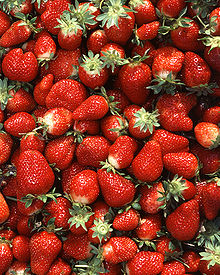
Japan currently has the largest production and consumption of dessert strawberries in the world. Their color and shape are truly outstanding and they are available almost anytime throughout the year, although the best season is from January to March. You can buy them at fruit shops, greengrocers or supermarkets (a container of more than 10 costs around 500 yen). Strawberry farms throughout Japan offer strawberry picking during this season, and it is wonderful to taste them right off the vine. (For an admission fee of around 1,500 yen per adult, you can eat as many as you like within a limited time.) Recommended brands are Nyoho and Toyonaka. Both have a fine balance of sweetness and tartness, and the flavor spreading inside your mouth as you bite into the fruit is marvelous. They are sometimes eaten with sugar, milk or yogurt, but these days, most strawberries are sweet enough to just wash and eat.


Prosper Co. LTD
No.1 car dealer in japan
http://www.prosperjp.com/

3 DOORS MODEL RAV-4


2000 TOYOTA RAV-4

MODEL CODE: ACA20W

DISPLACEMENT: 2000cc, 4WD

MILEAGE: 52,240

F.O.B. Price:¥560,0000


just contact: toshi@prosperjp.com